What Is Goto Coffee Farm in Minami-Aso?
A visit to Goto Coffee Farm, growing coffee in Aso, Kumamoto. The passion of former high-school teacher Mr. Goto, and the story behind "Aso Coffee."
“There’s a farm growing coffee in Aso, Kumamoto.” When I first heard that, I was honestly surprised — and excited at the same time. That farm is Goto Coffee Farm.
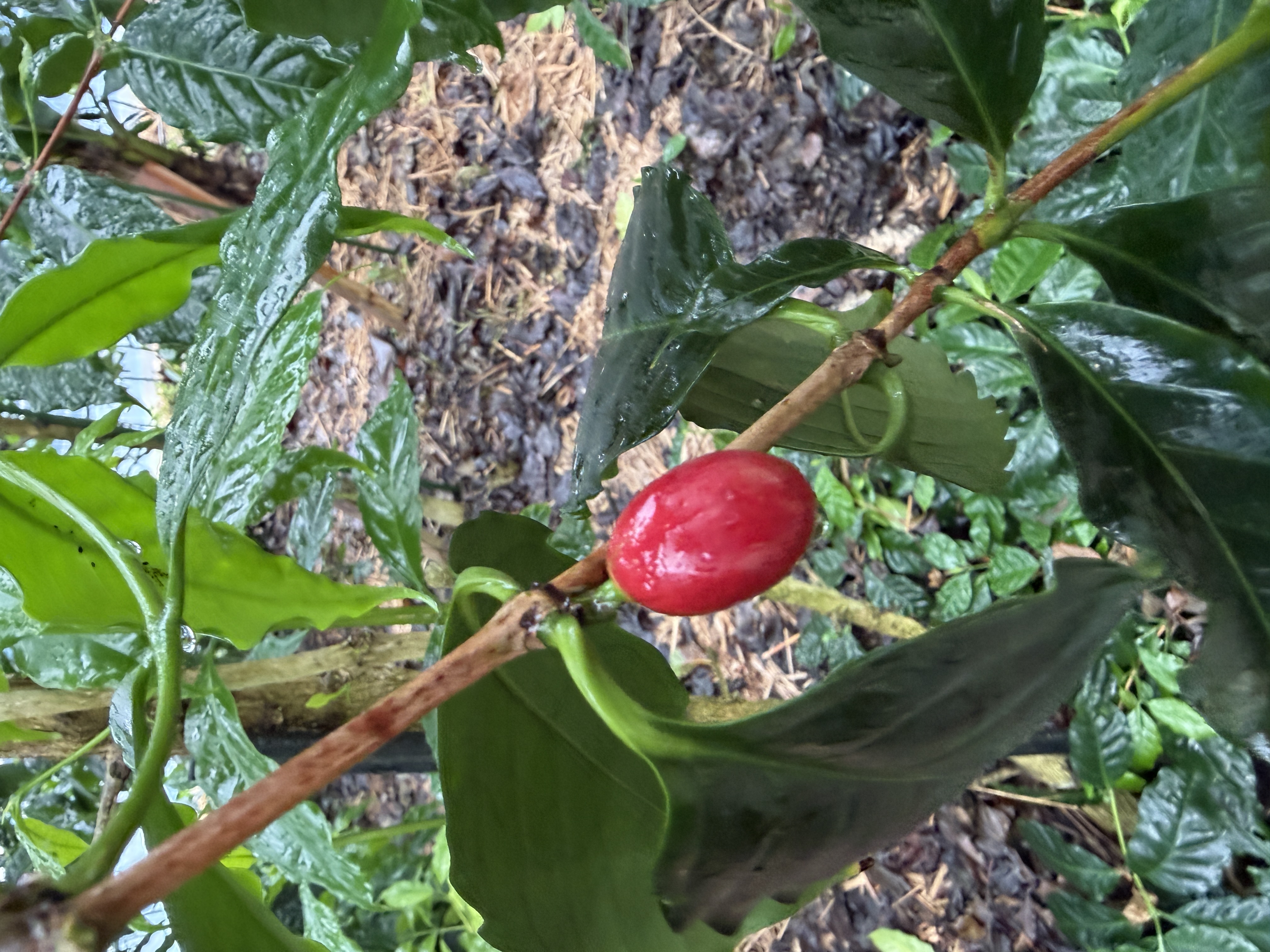
Coffee brings to mind places like Brazil or Ethiopia, so the very idea of cultivating it in Aso, Kumamoto had never occurred to me. At Goto Coffee Farm, they actually grow coffee while making the most of Aso’s natural environment. And it isn’t just a novelty “domestic coffee” — it draws attention from across Japan as a coffee with a story, through things like:
- “Aso Coffee,” made the most of Aso’s nature
- A coffee-tree “owner system”
- Former high-school teacher Mr. Goto’s devotion to his community
Coffee in Aso? The challenge called “Aso Coffee”
The most striking thing about Goto Coffee Farm is simply that it grows coffee in Aso at all. Aso has a wide difference between daytime and nighttime temperatures, as well as cold winters — conditions that many people would not normally associate with coffee, a crop often thought of as tropical.
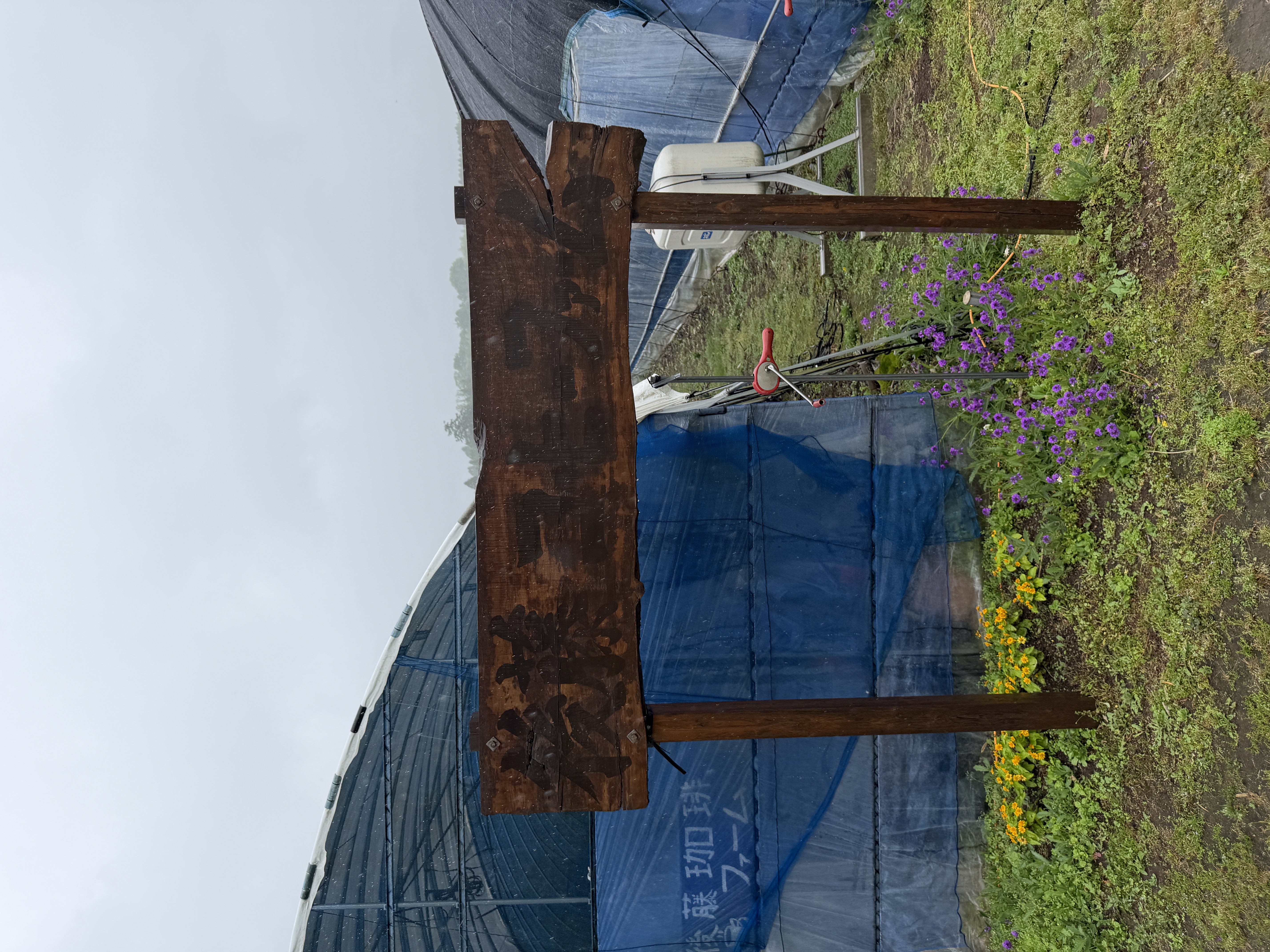
In that setting, Mr. Goto began developing a new local specialty together with his students, sparked by his 2002 assignment to a local high school. Through much trial and error, he took on the challenge of growing coffee. Drawing on “Aso spring water” and “grassland wild-herb compost,” he works on it as a new specialty product that also helps preserve Aso’s nature and landscape (from the Goto Coffee Farm official site).
On the milestone marking ten years since the Kumamoto earthquake, “Aso Coffee” made from 100% Goto Coffee Farm beans was served at the cafe within Seifuso at Jigoku Onsen in Minami-Aso Village. I wanted to take part myself, but it fell on a weekday and I couldn’t make it. I’d love to join on the next occasion.
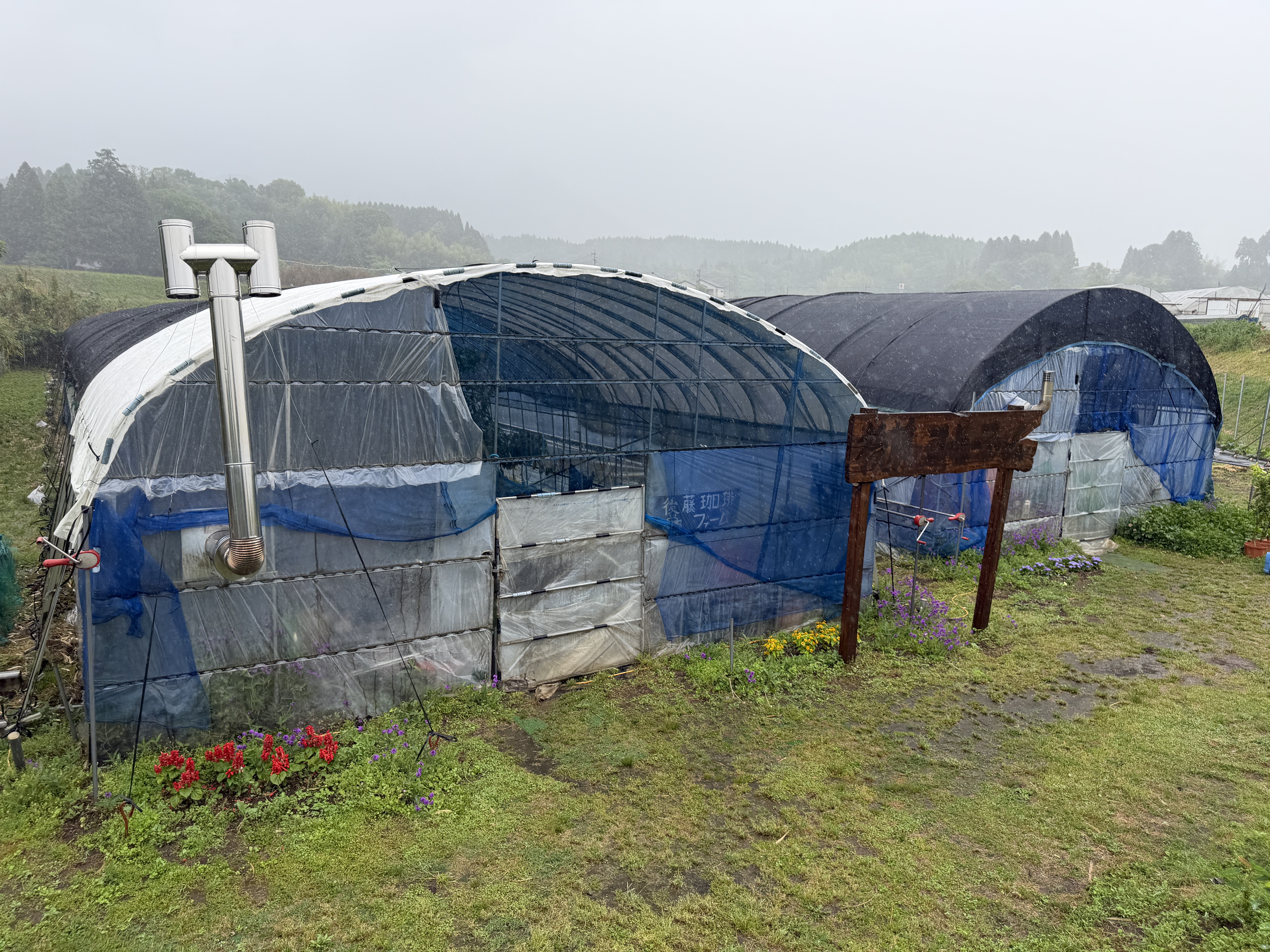
The coffee-tree “owner system” is fascinating
One thing you can’t leave out when talking about Goto Coffee Farm is its “coffee-tree owner system.” It lets you have your very own coffee tree, and you can enjoy the harvested beans as your own coffee.
What’s more, if you wish, you can experience everything from growing and harvesting to processing, roasting, and brewing — truly “from tree to cup.” There seem to be many owners from outside the prefecture too, and even if you can’t make it for the harvest, they can roast the harvested beans and ship them to you. Another draw is that they hold training sessions on pruning and soil-building to raise yields. Personally, I really want to make the time to take part.
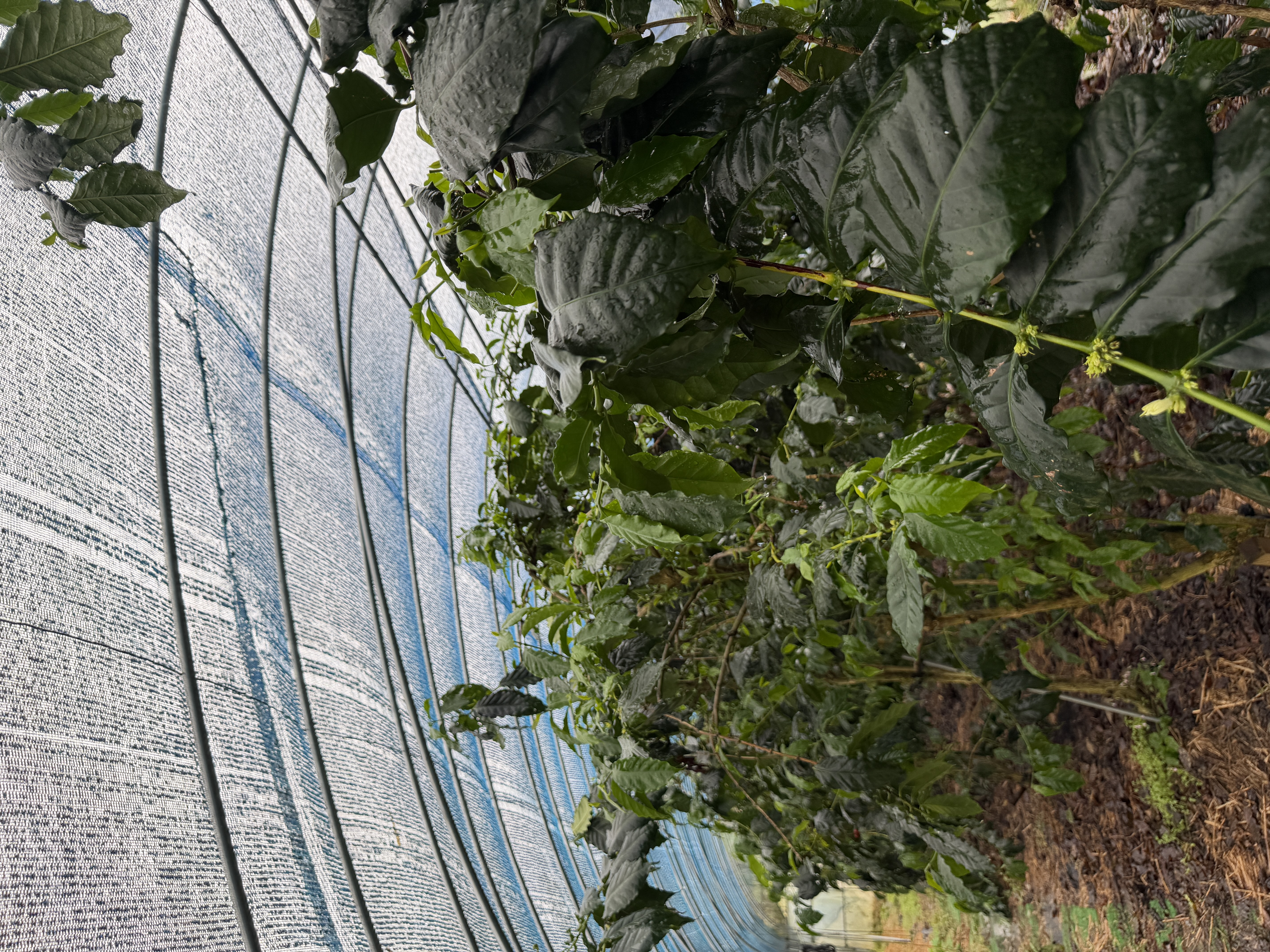
Mr. Goto’s character and story are part of the appeal
The appeal of Goto Coffee Farm isn’t only the coffee. Mr. Yoshinari Goto is a former high-school teacher. While researching crops for regional revitalization with his students at an agricultural high school, he arrived at coffee cultivation (see this note article).
He also lived through the Kumamoto earthquake, and the disaster deepened his wish to “contribute to the region’s recovery” (see Livedoor News).
What stays with me is Mr. Goto’s words that “growing coffee and education are alike” (see TBS NEWS DIG).
Plants and children alike answer you when you keep watching their daily changes.
The Mr. Goto I actually met was a friendly person who taught me about Aso and coffee cultivation kindly and enjoyably. It felt as if I’d gone back to being a high schooler myself — as if he’d shared with me the youthful energy of chasing a dream.
There’s value that goes beyond “domestic coffee”
Honestly, domestic coffee isn’t something you can mass-produce. Goto Coffee Farm, too, treasures the idea of “the owner’s coffee,” and general sales are limited (from the Goto Coffee Farm official site). That’s exactly why it has value.
Aso’s nature, regional recovery, human connections, and a passion for growing coffee — all of it connects to a single cup. Rather than merely “premium coffee,” it may be “coffee you savor as a story.”
If you want to taste Aso Coffee
On my visit, I had Aso Coffee at H_NNTO COFFEE. It’s a small cafe on the grounds of Seifuso at Jigoku Onsen, run by one of Mr. Goto’s former students. Depending on the season, you can drink Aso Coffee made from 100% Goto Coffee Farm beans there. I’ll introduce H_NNTO COFFEE and Seifuso in detail in a separate article.
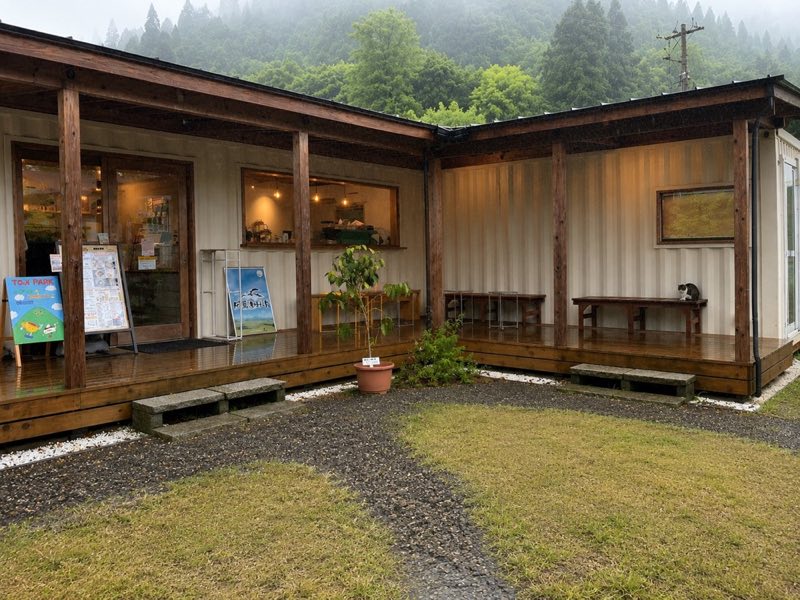
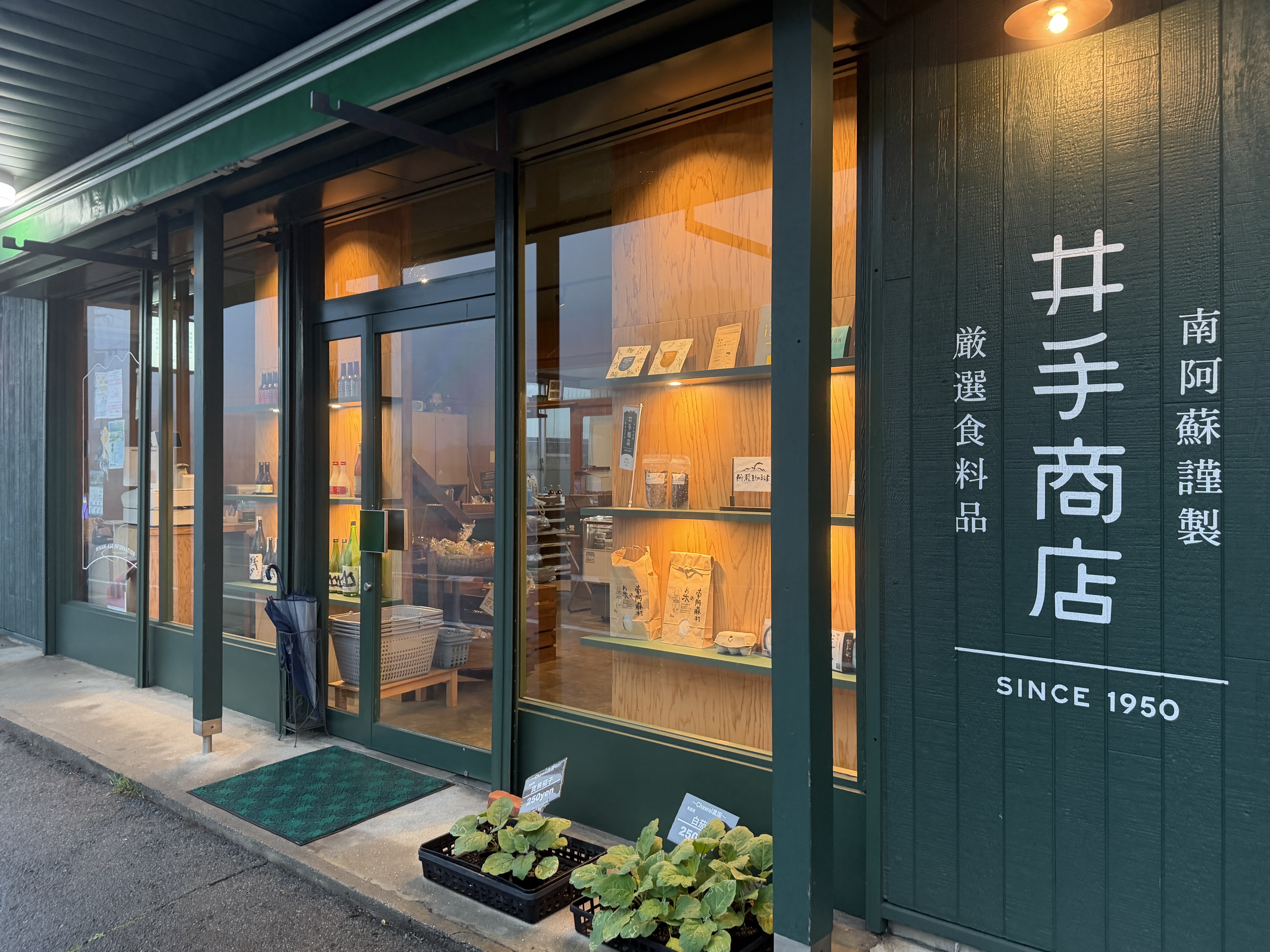
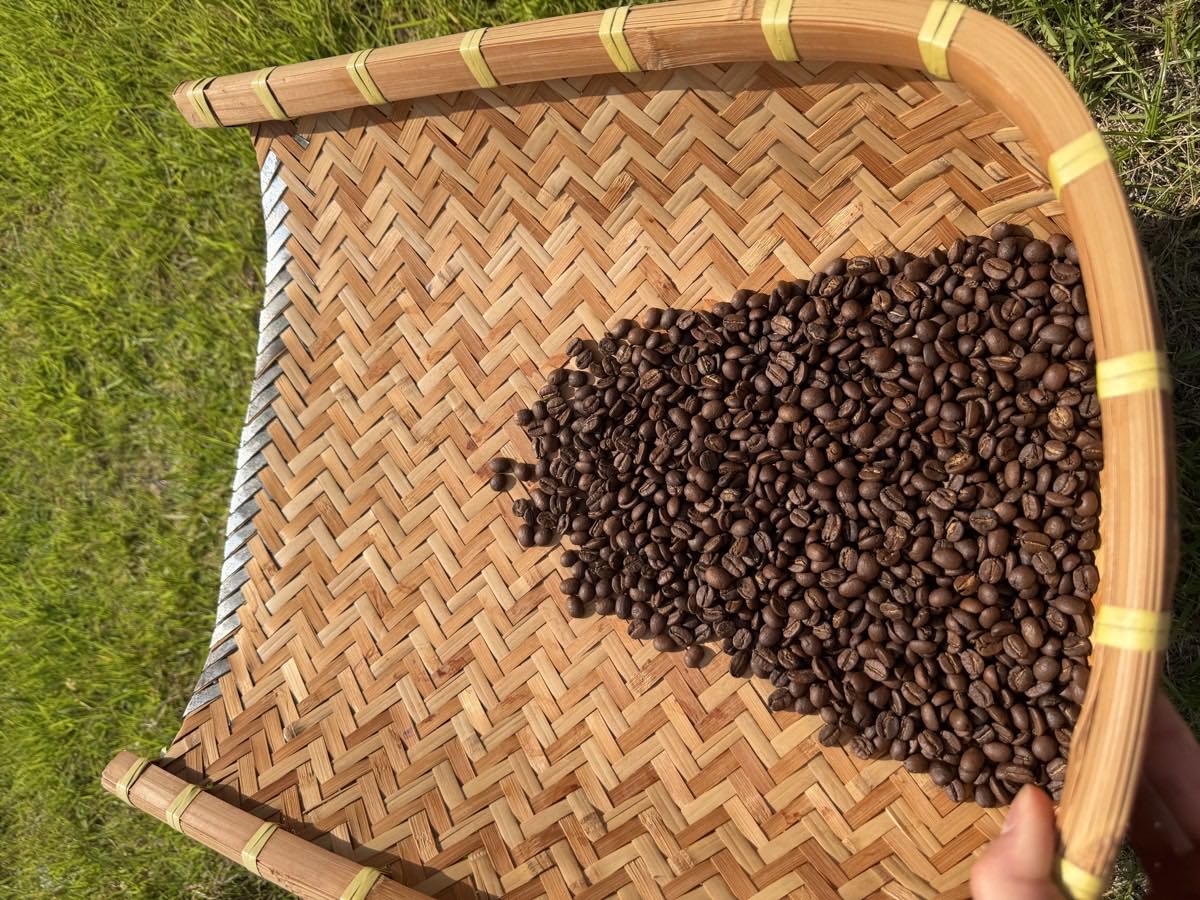
There’s also Ide Shoten, a community-rooted shop near the new Aso Ohashi bridge in Minami-Aso, where — though rare — you can sometimes buy coffee beans and drip packs in 10g portions. I plan to introduce what I bought at Ide Shoten in a separate article too. If you ever get the chance to visit Aso, do stop by.